
Princess Auto/
Payment integration and checkout for Princess Auto — the Canadian retail brand. Connecting and configuring the payment stack for secure, reliable transactions at scale.
Browse the project/
Swipe through the shipped surfaces — one screen at a time.
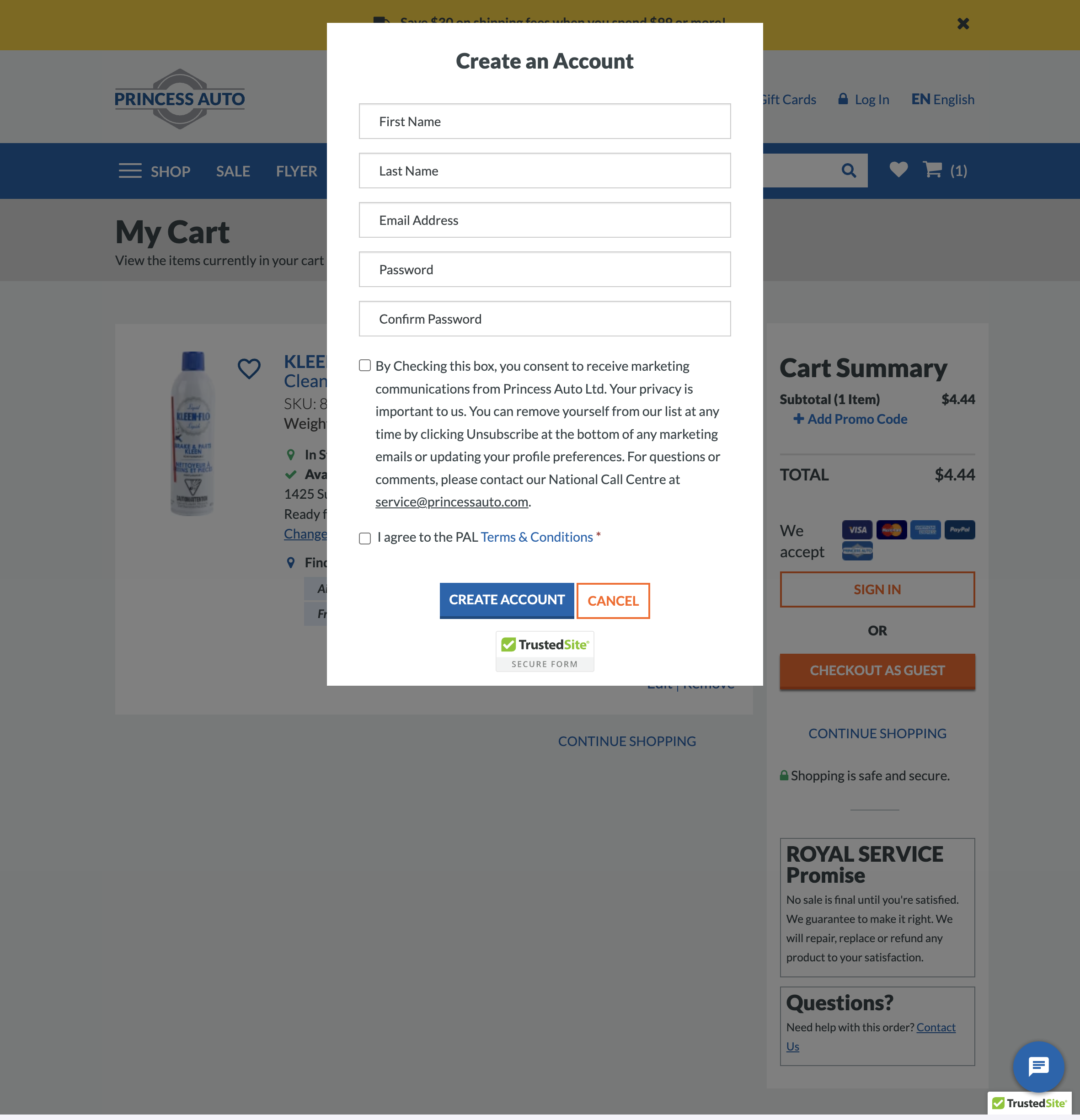
Boring payments are the best payments/
The job wasn't to reinvent checkout — it was to make sure every transaction lands cleanly, every refund threads, and every state survives a retry.
Princess Auto needed payments wired up across their public storefront and store-pickup flow. The work was the unglamorous half of e-commerce: payment intents, idempotency keys, webhook reconciliation, refund handling, and the surface area where the storefront meets a checkout SDK.
I owned the integration end-to-end: server-side intents in NestJS, client-side checkout flow in Next.js, webhook handlers for async settlement, and the dashboard plumbing that lets ops see what's stuck.
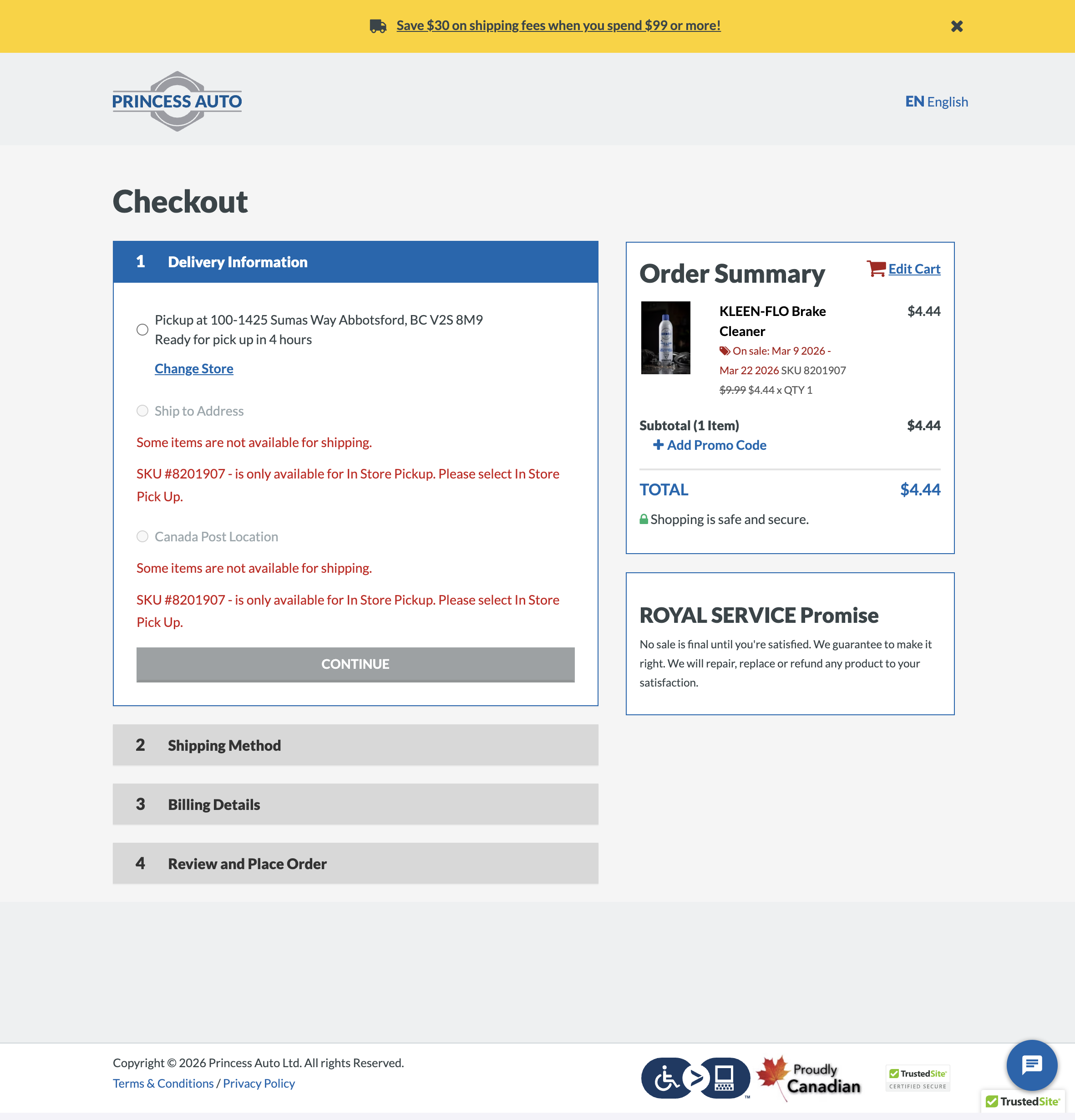
The store-pickup and shipping options share the same intent model, so refunds and partial captures behave the same regardless of fulfillment path.
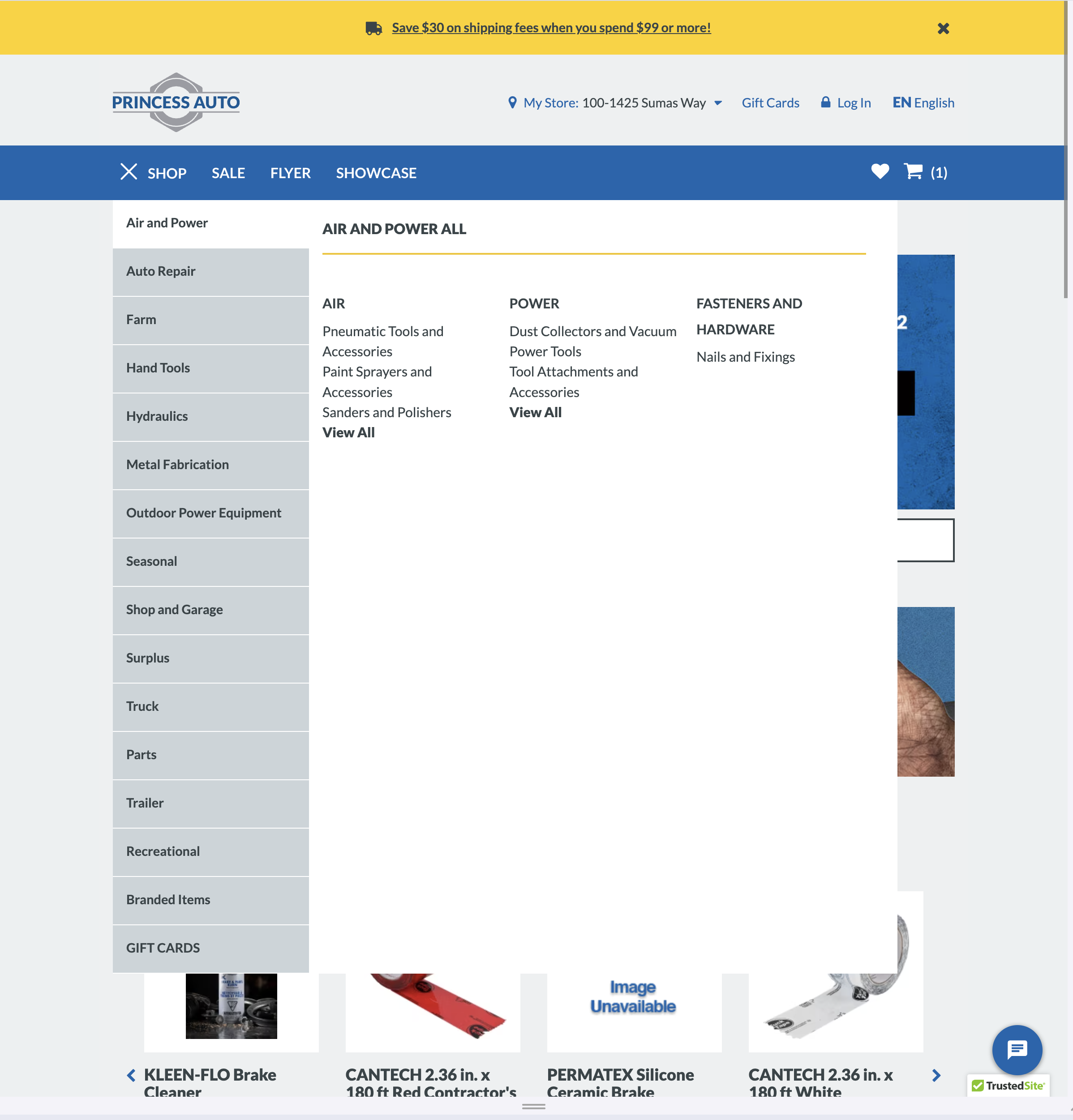
A storefront with payments wired through/
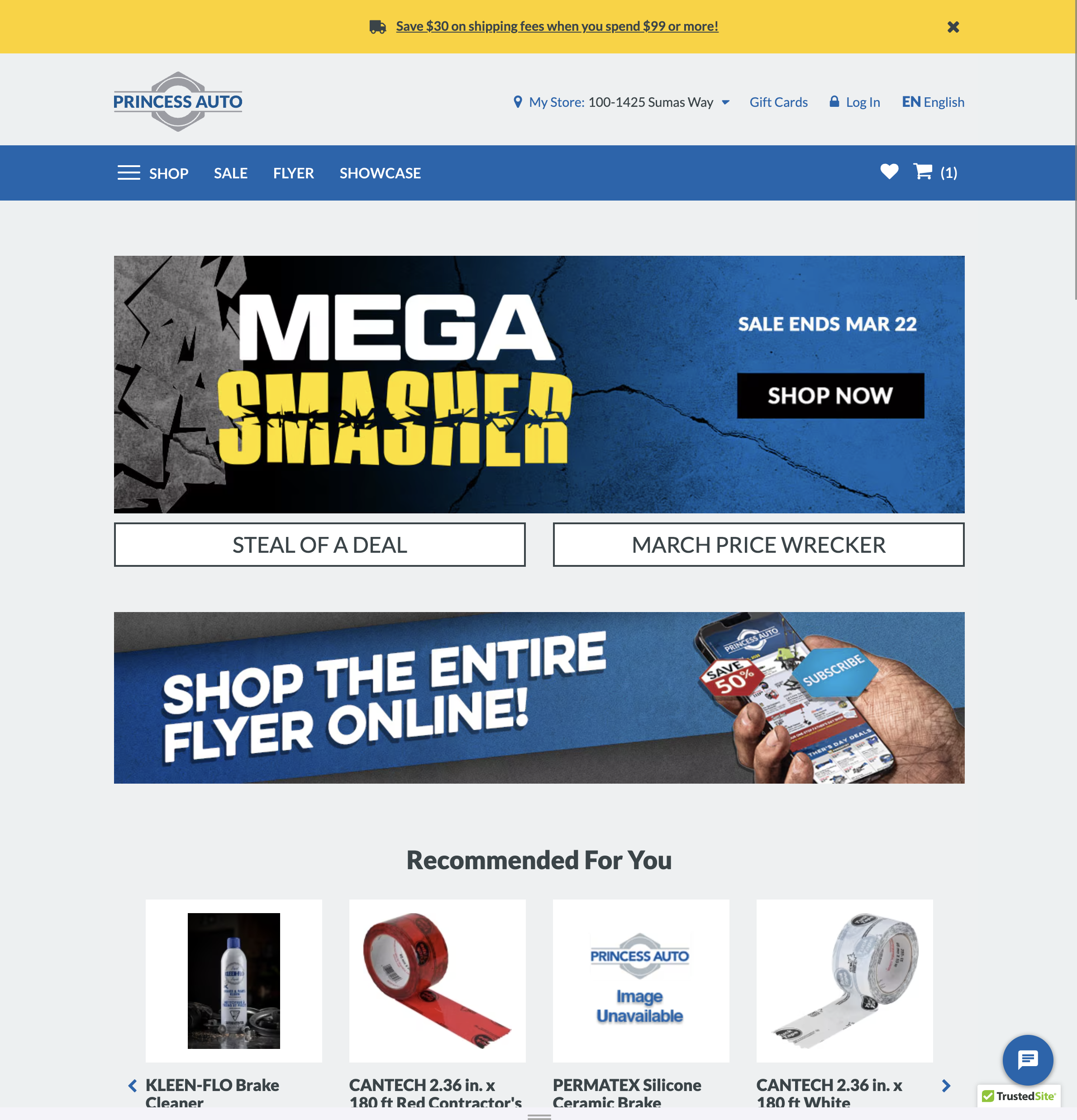
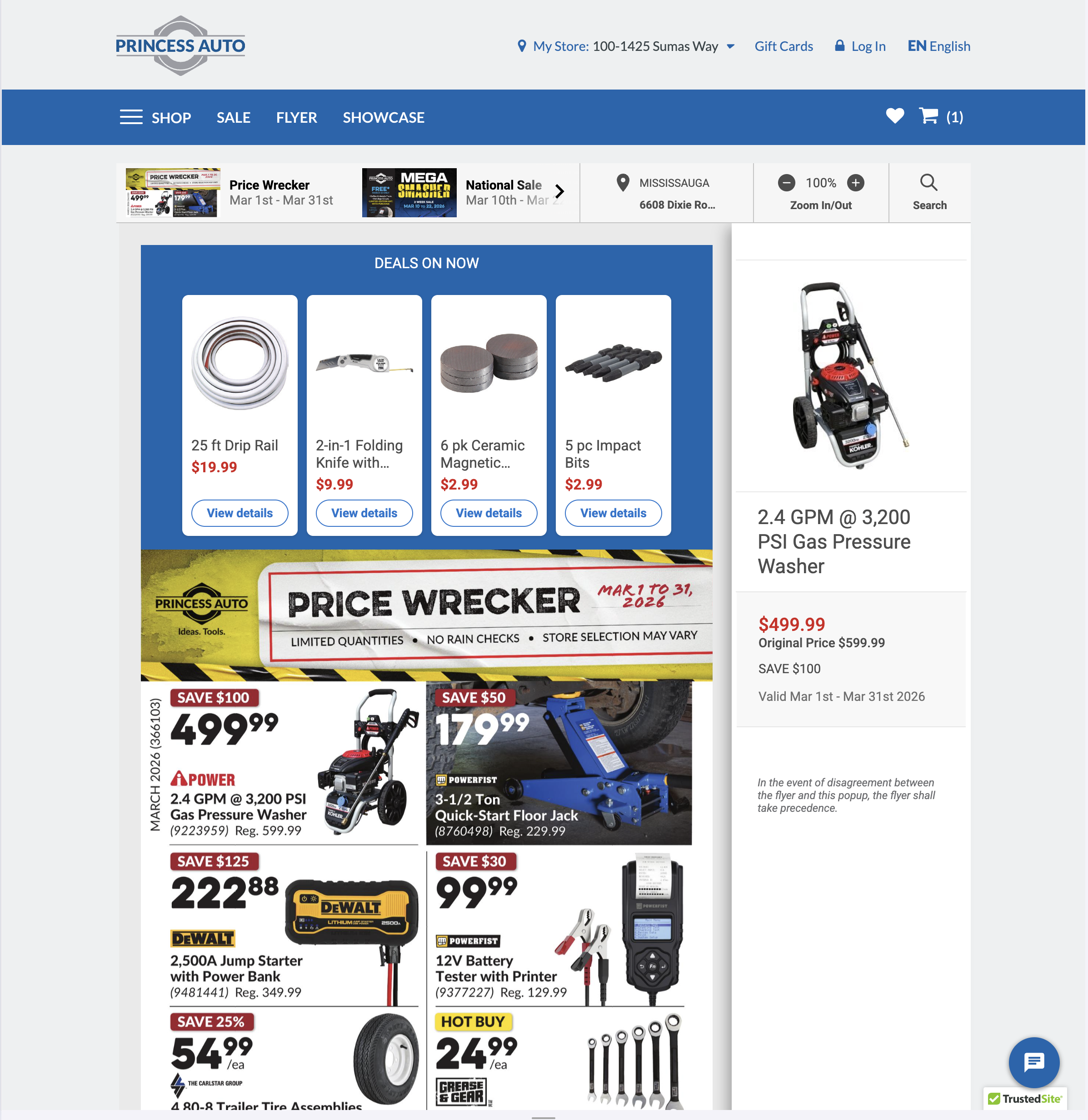
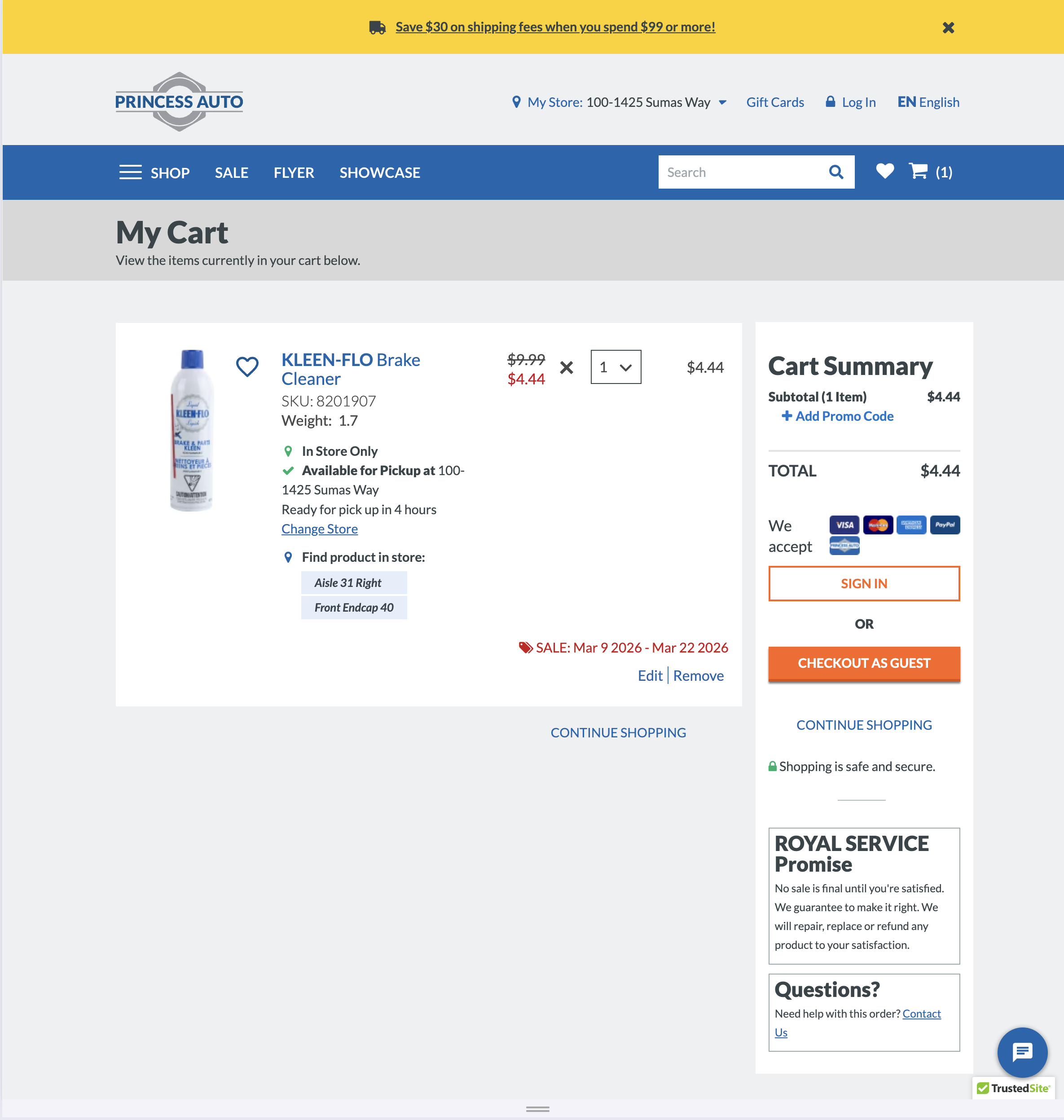
Catalog, promos, flyers, and a basket flow — all sitting on top of a checkout backend that doesn't lose money on a flaky connection.
- Mega Smasher / sale promo placements
- Pickup + ship-to-home in one checkout
- Idempotent basket and intent semantics
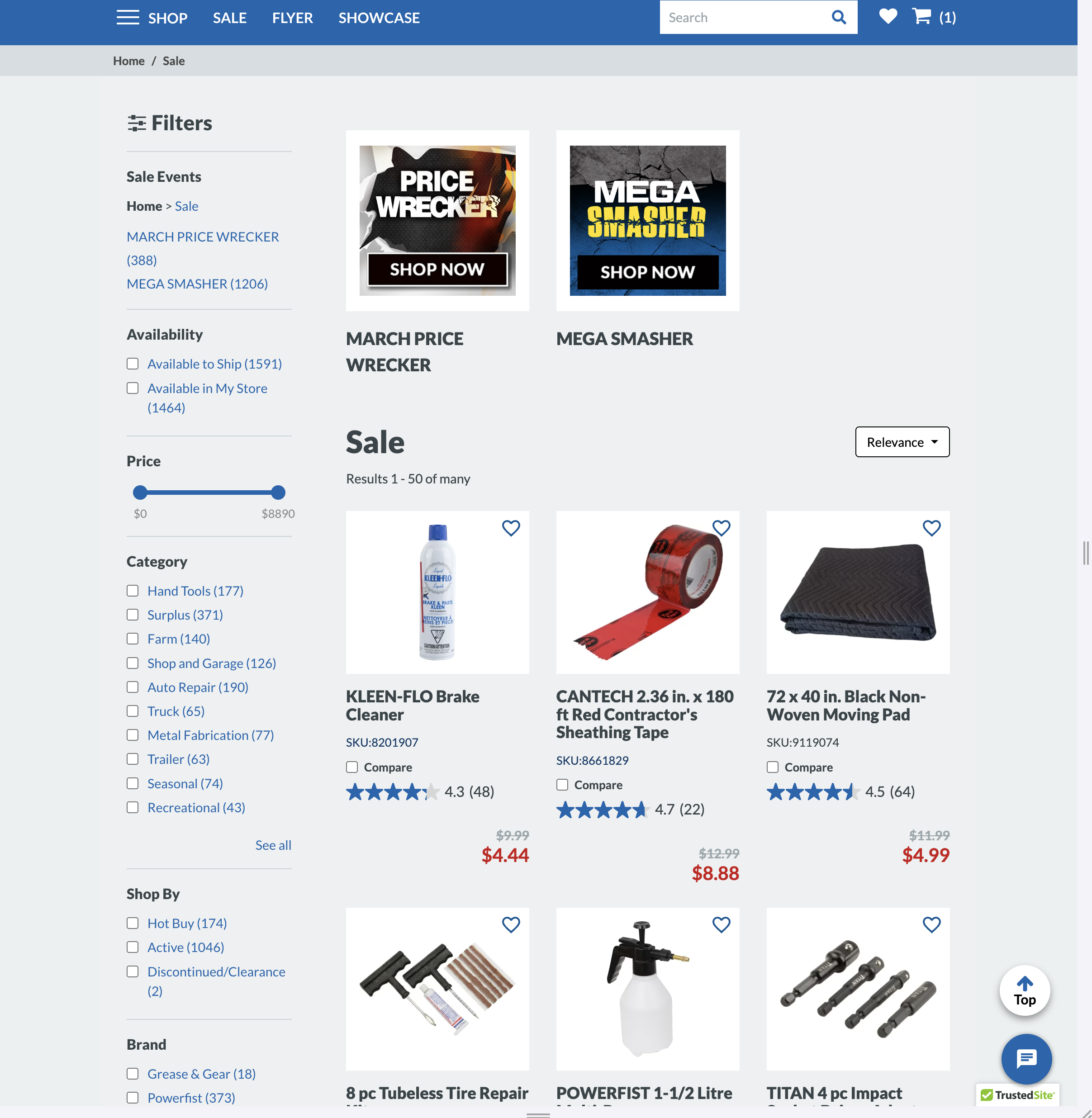
Server-authoritative intents and retries/
Every payment is initiated server-side with an idempotency key tied to the cart hash. Retries from a flaky client don't double-charge; webhook reconciliation closes the loop.
- Server-side payment intents with idempotency keys
- Cart-hash-bound retry semantics
- Webhook-driven settlement reconciliation
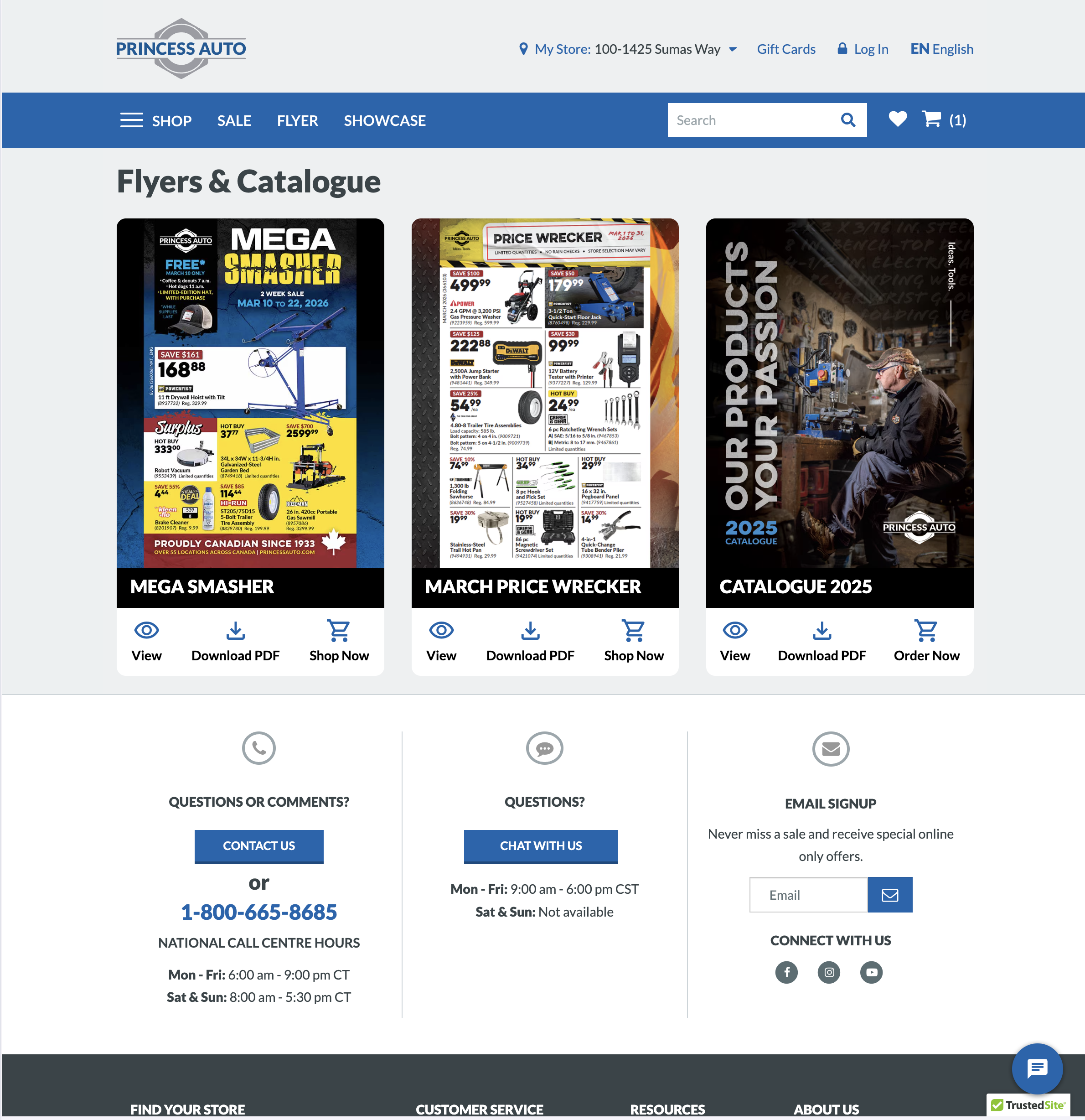
Refunds that survive partial fulfillment/
Online + store-pickup means partial fulfillment is the norm. Refunds are processed against the same intent model so accounting stays clean across split shipments.
- Partial + full refund support
- Reconciles across store-pickup and ship-to-home
- Accounting export with per-line tax + fees
From homepage to confirmation/
A walk through the public storefront surfaces.
Payments that don't lose money/
If you're plugging a payment processor into a real-world commerce flow and want it to behave under load — let's talk.