
Ferge/
A recruiting and talent-pipeline platform — job postings, candidate management, hiring insights, structured interview workflows, and RBAC across recruiters and hiring managers.
Browse the project/
Swipe through the shipped surfaces — one screen at a time.
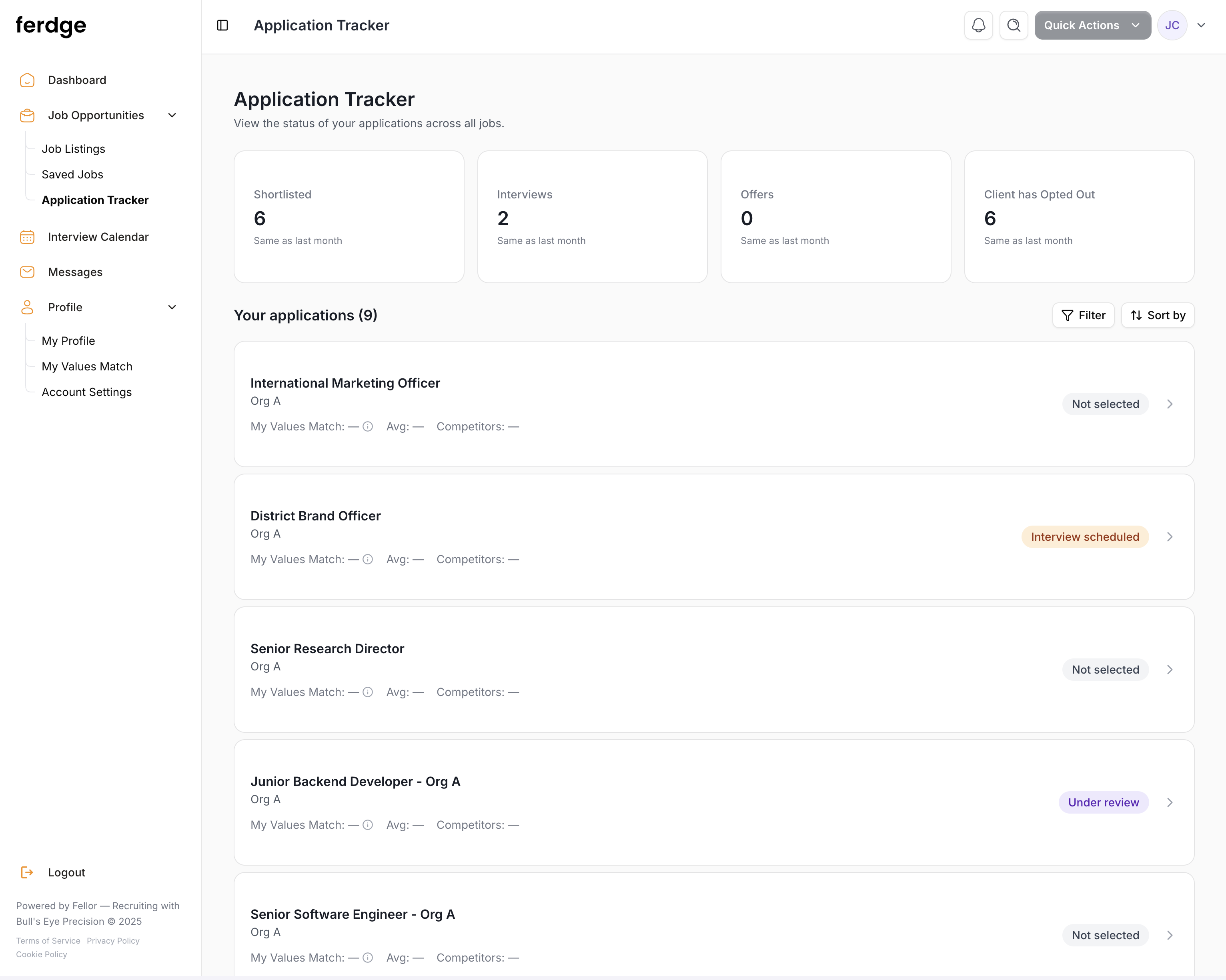
Hiring that doesn't live in spreadsheets/
Ferge takes the messy reality of hiring — req intake, sourcing, structured interviews, offer flow — and turns it into a single dashboard with the analytics that hiring managers actually want.
The product spans recruiting workflow (job posts, candidate pool, talent pipeline) and hiring analytics (funnel conversion, time-to-hire, candidate comparison). All of it sits behind a role model that separates recruiters, hiring managers, and admins.
I worked across the React/TypeScript front-end and the Node.js API — building the structured job-post creator, the candidate-comparison view, the hiring insights chart, and the upcoming-interviews widget that anchors the dashboard.
The hardest piece wasn't the UI — it was the data model for a candidate moving through stages, with notes, feedback, and approvals all chained to permission roles.
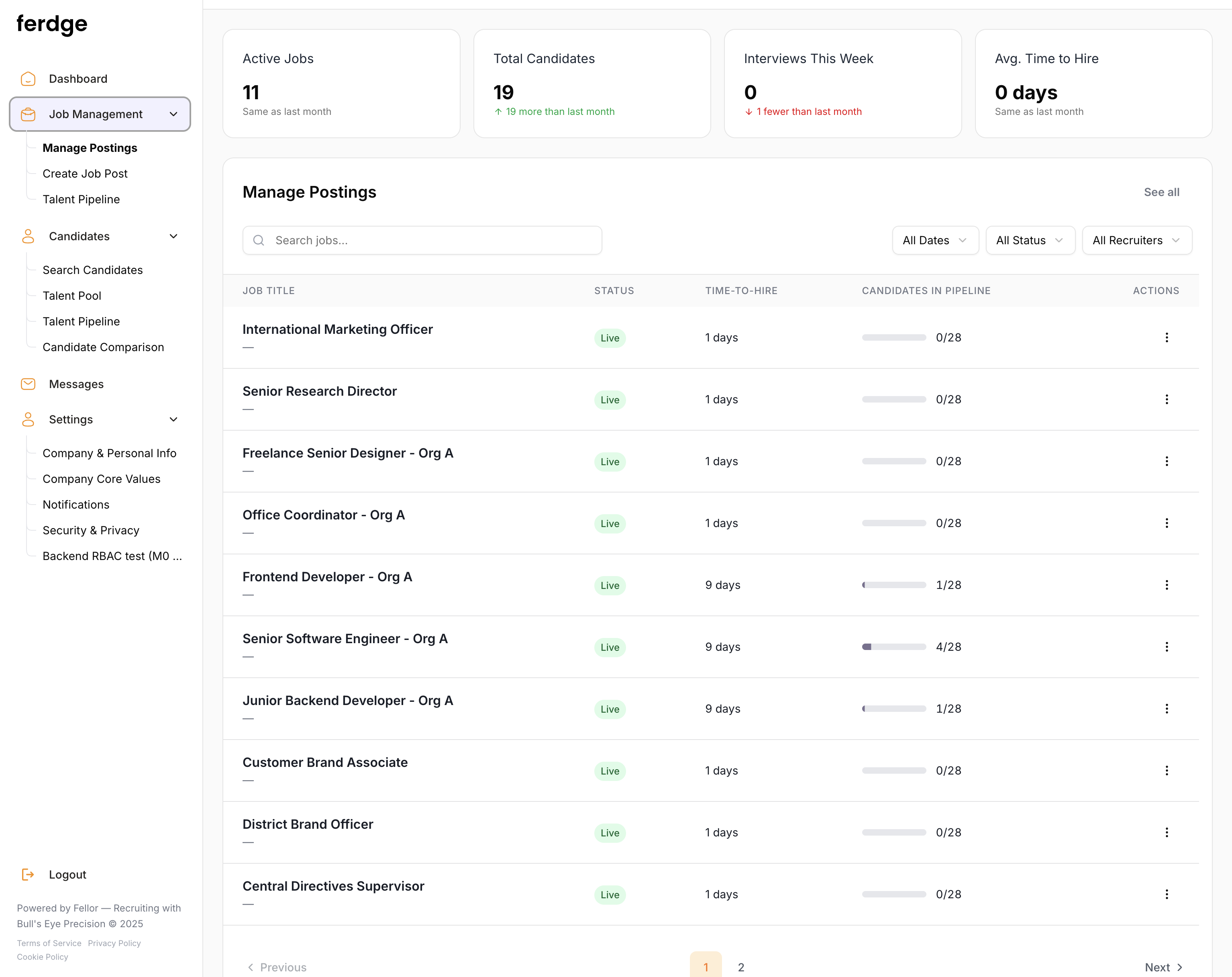
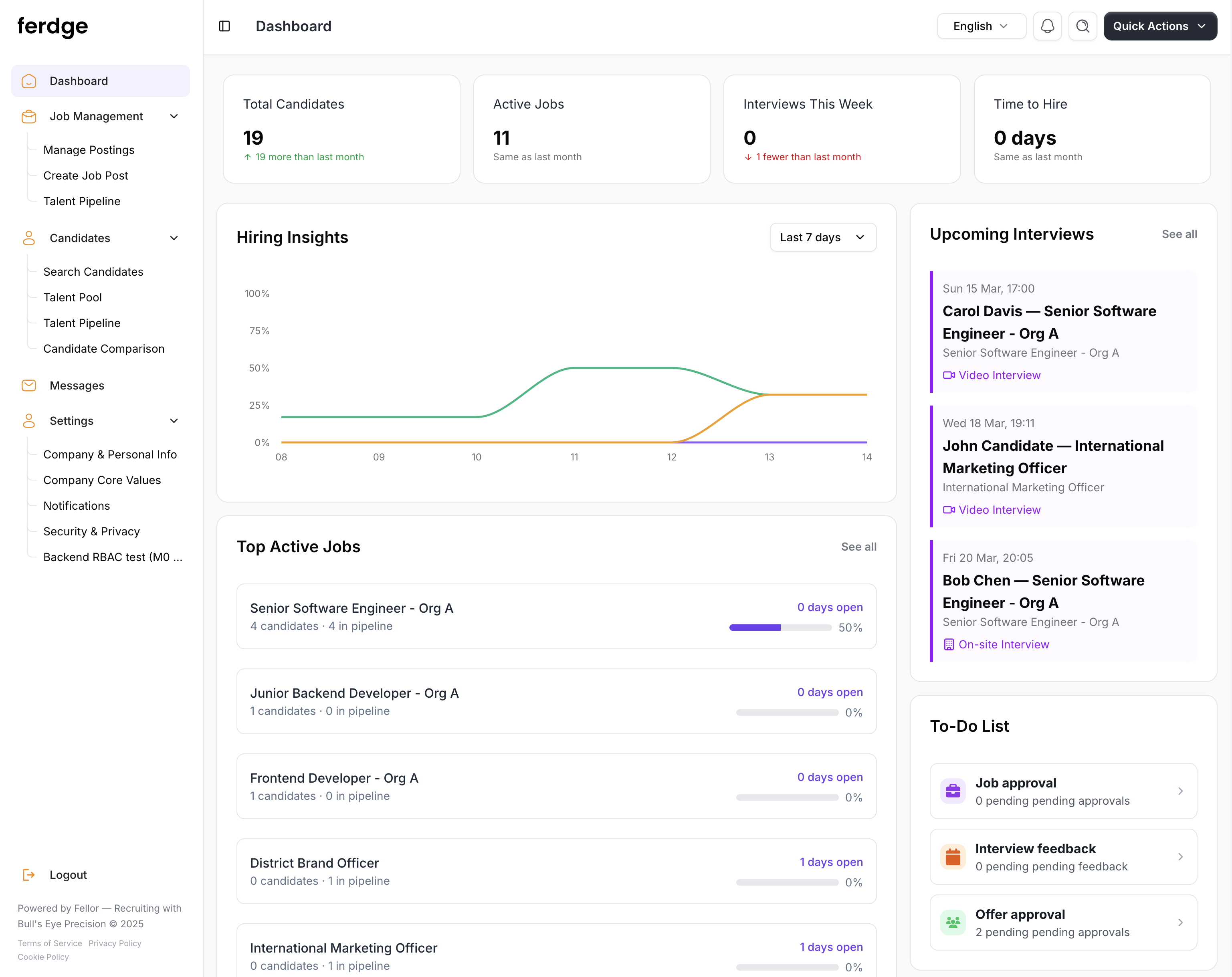
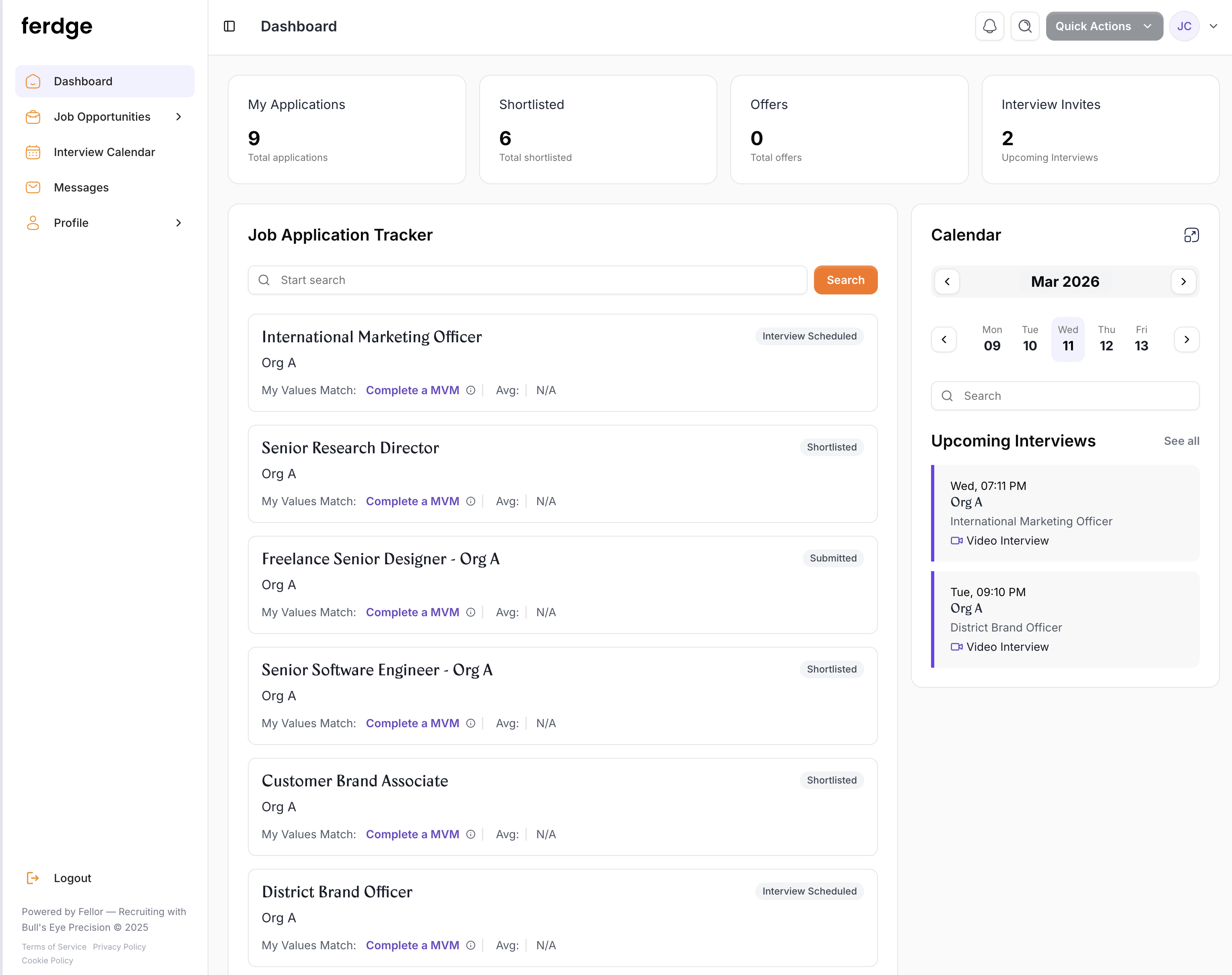
The first surface a recruiter sees in the morning/
Total candidates, active jobs, interviews this week, time-to-hire, and a hiring insights chart — sized so a recruiter can read the room in 10 seconds.
- Top-line metrics with last-period delta
- Hiring insights chart over 7/30/90 days
- Upcoming interviews with one-click join
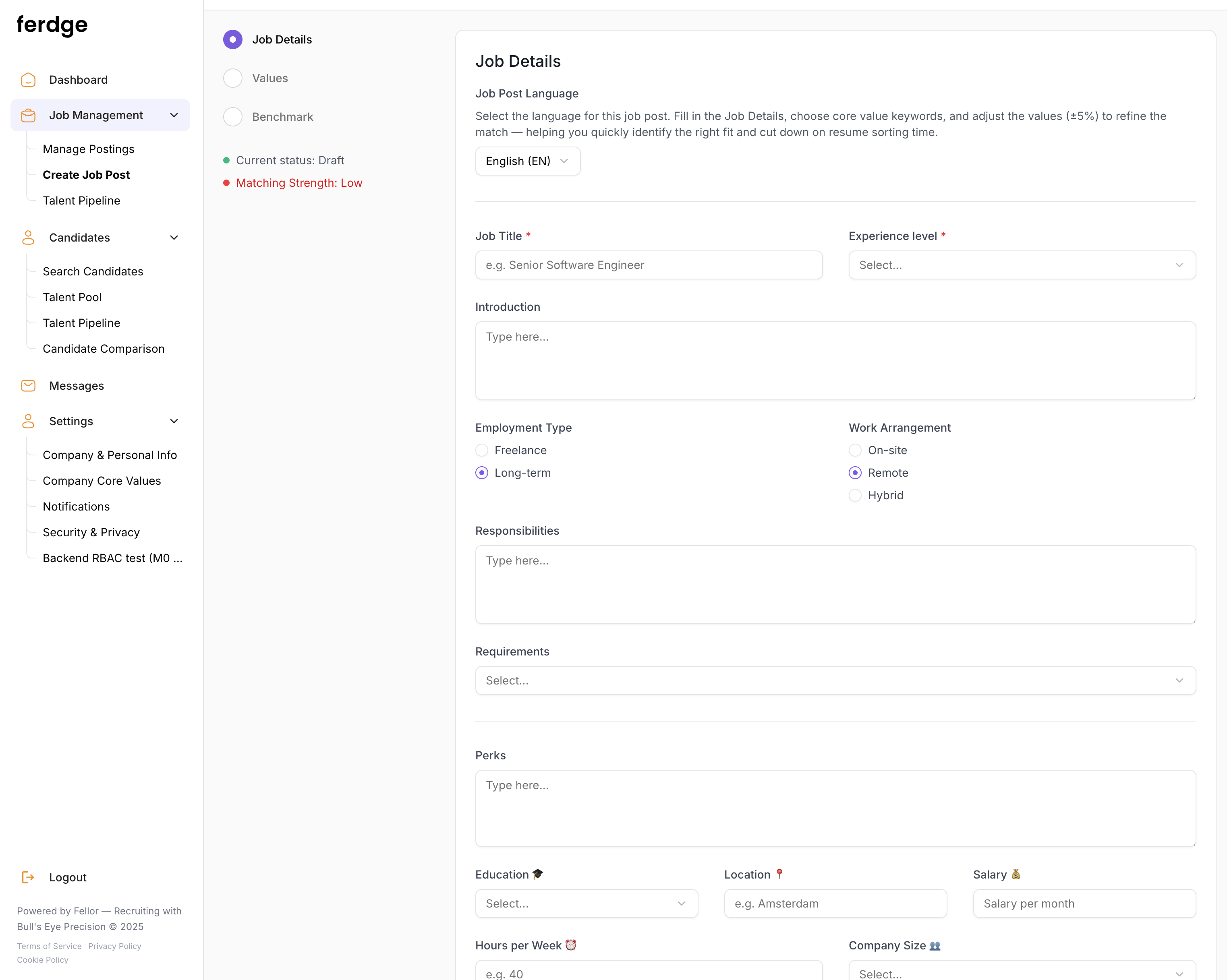
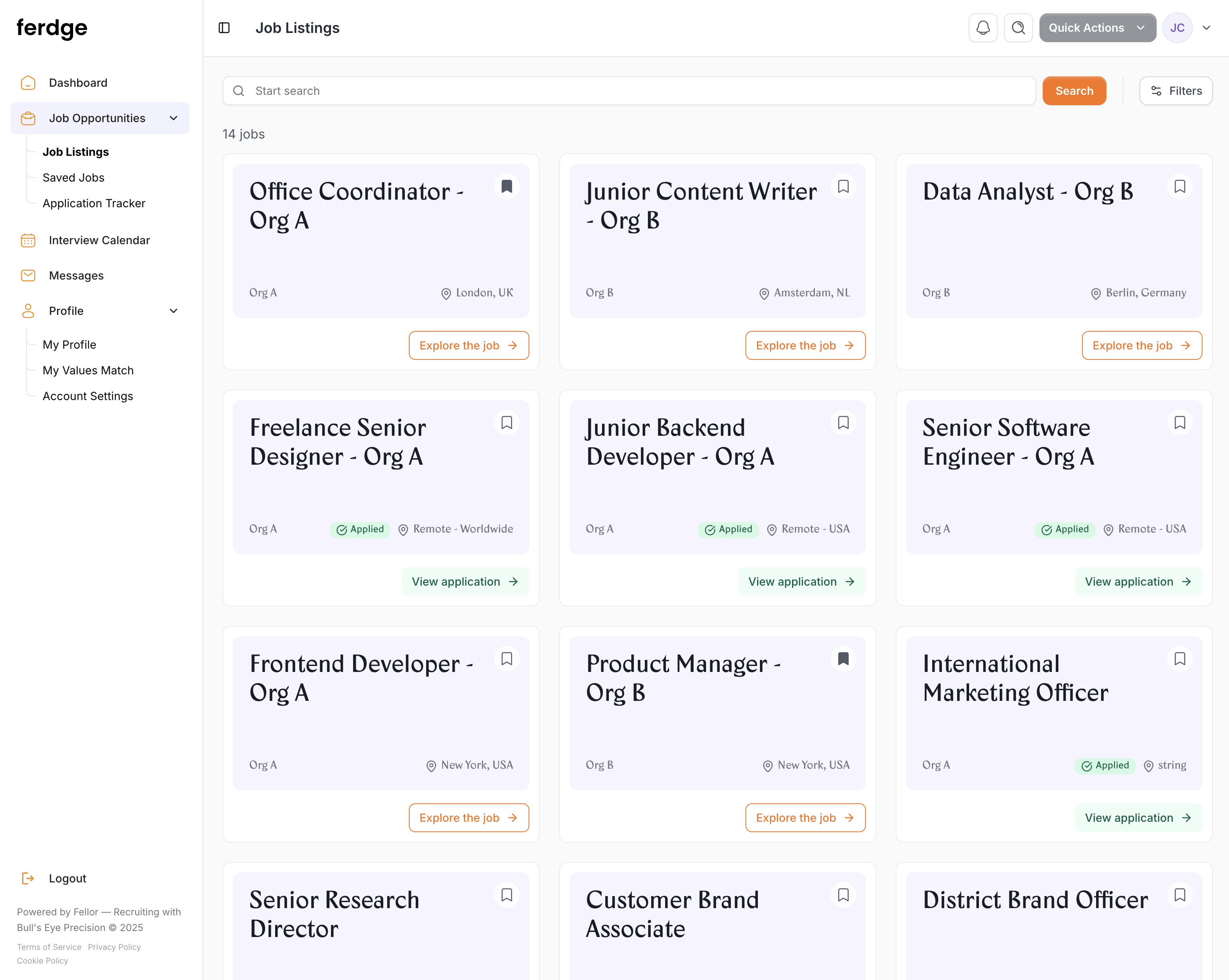
Structured job posts, not blob descriptions/
Job posts split into job-title, intro, employment type, work arrangement, responsibilities, requirements, perks, and a 'matching strength' indicator that scores fill-quality before posting.
- Structured field set for downstream parsing
- Matching-strength score on the draft
- Language tag drives candidate-side i18n
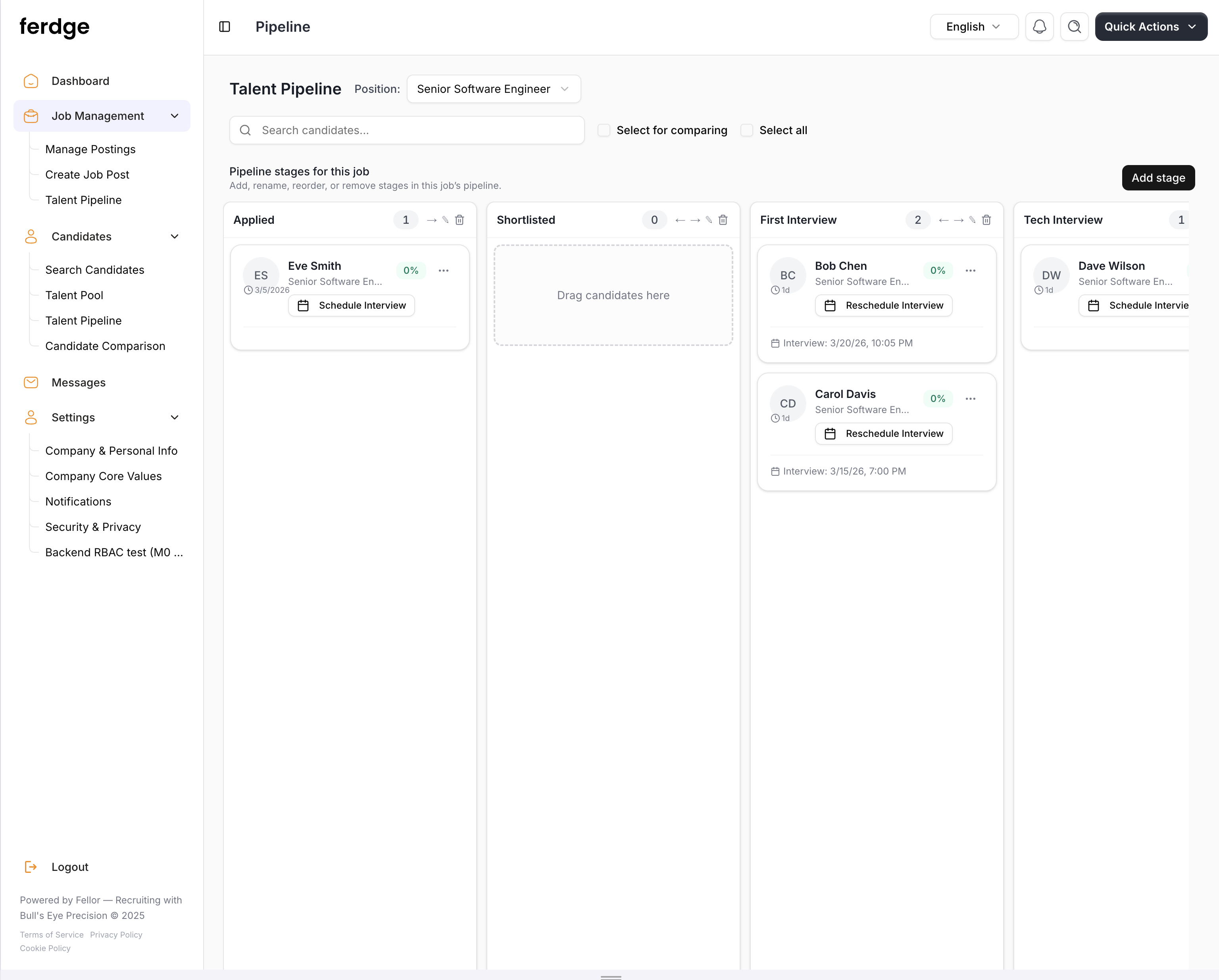
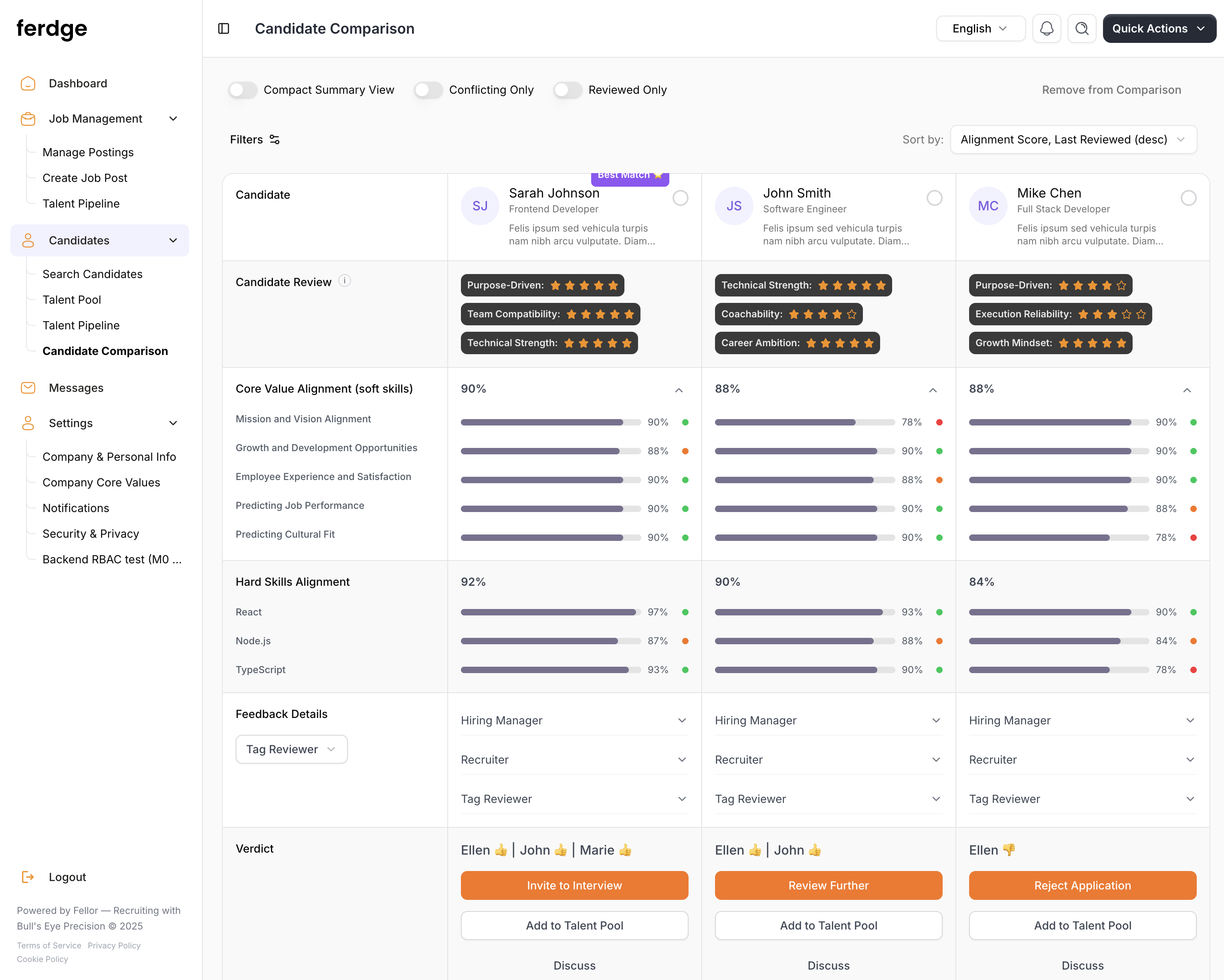
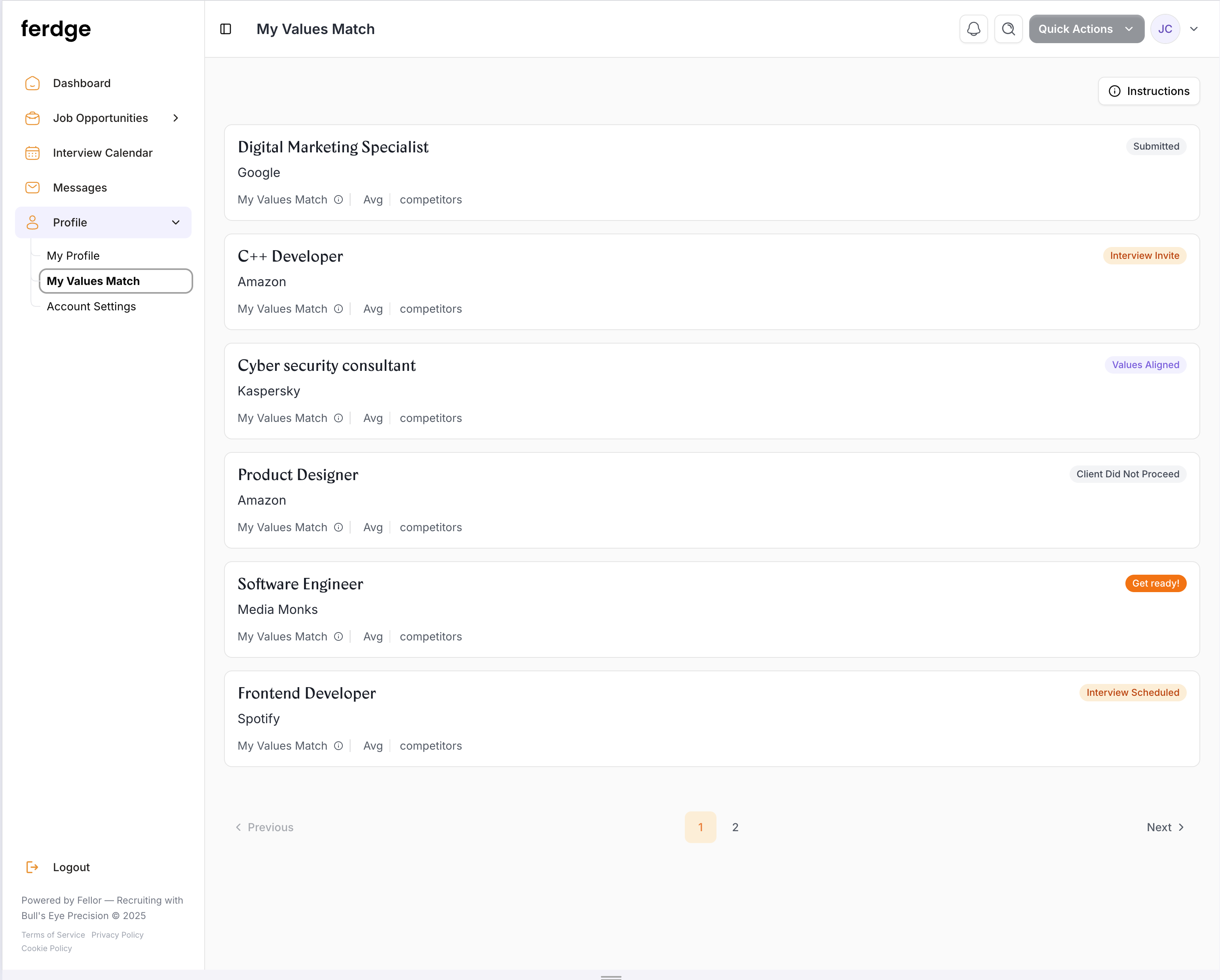
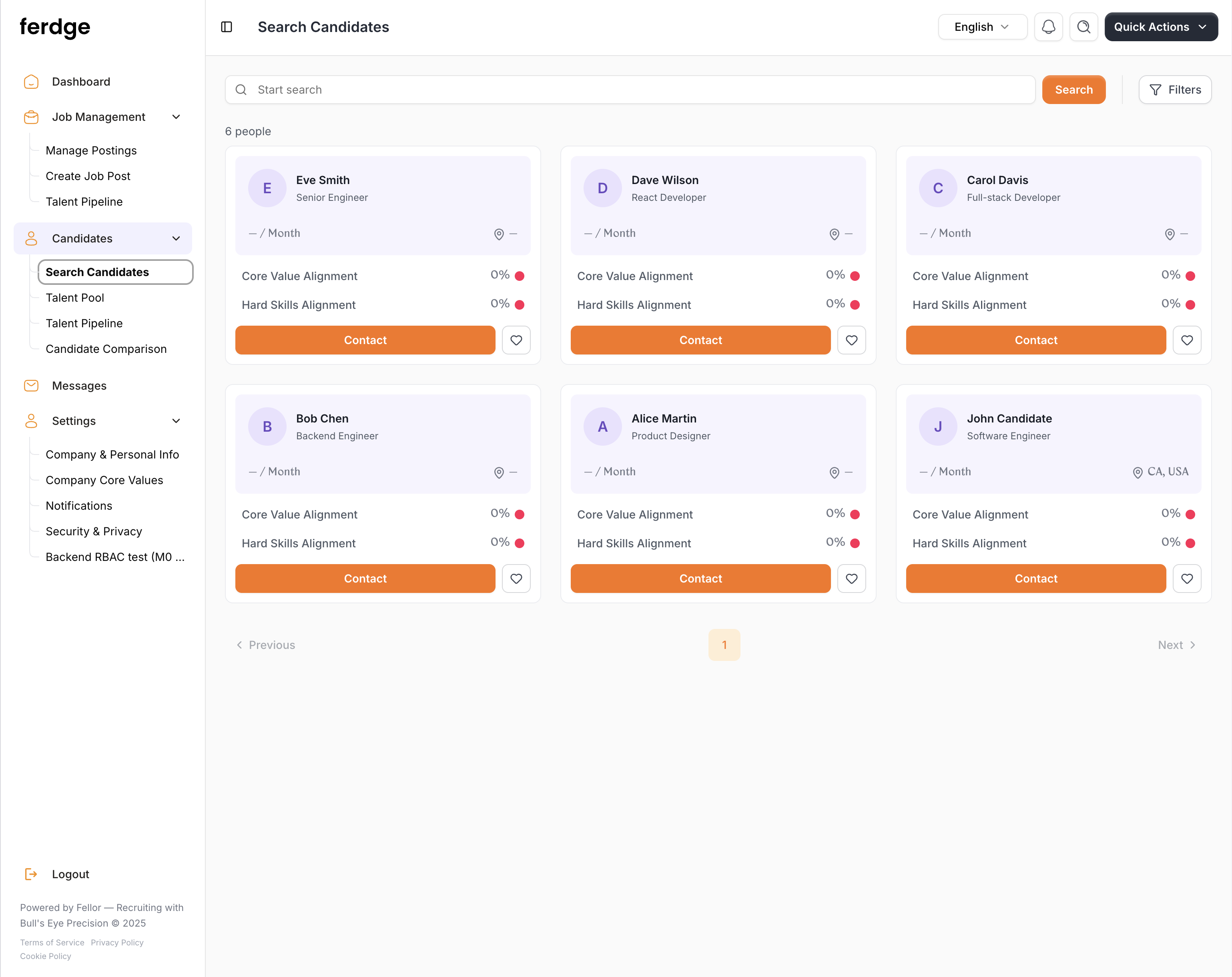
Talent pool, pipeline, and candidate comparison/
Candidates move through configurable stages. The comparison view lets a hiring manager line up shortlisted candidates side-by-side on the criteria that matter for the role.
- Configurable pipeline stages per role
- Side-by-side candidate comparison
- Stage-change audit log per candidate
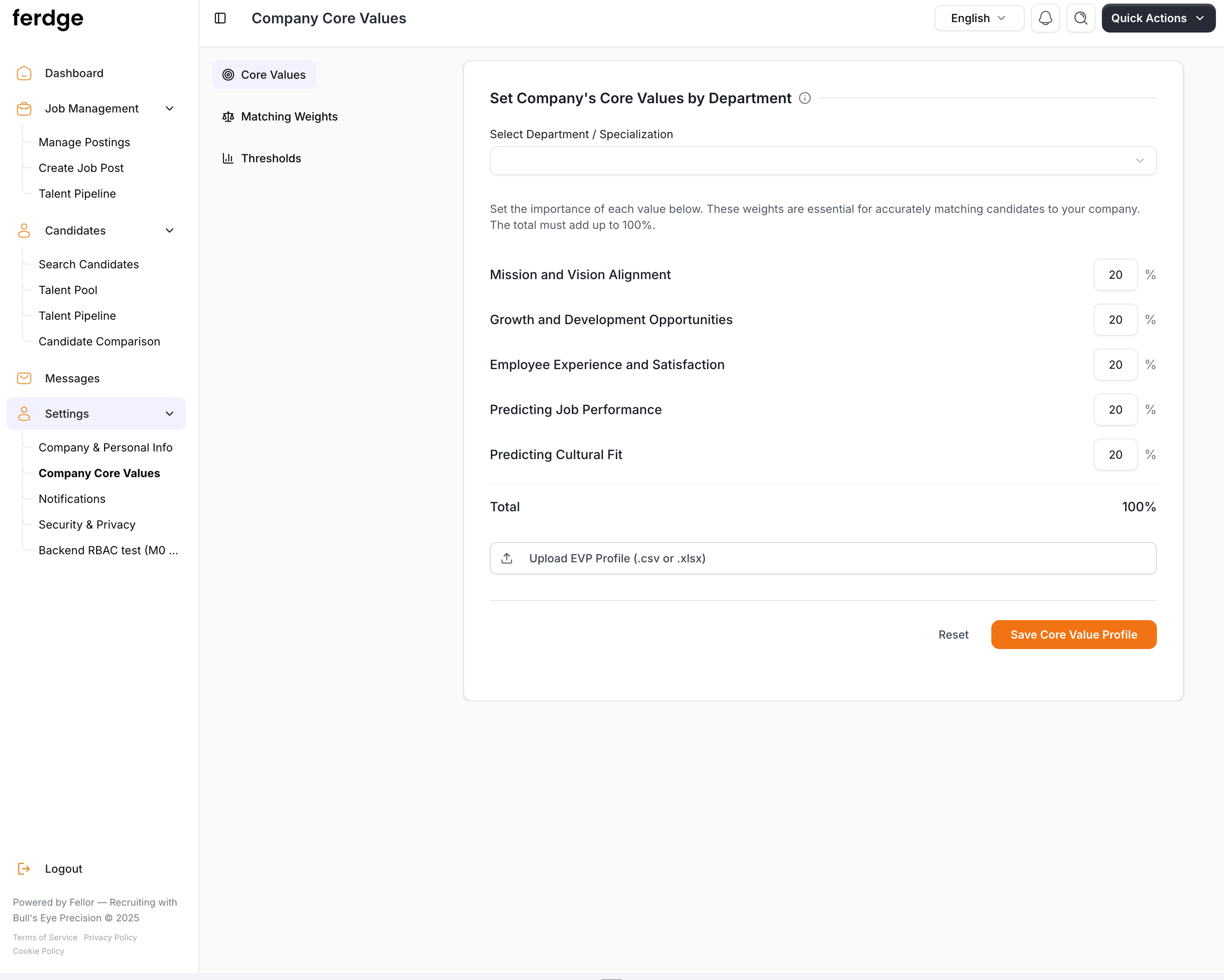
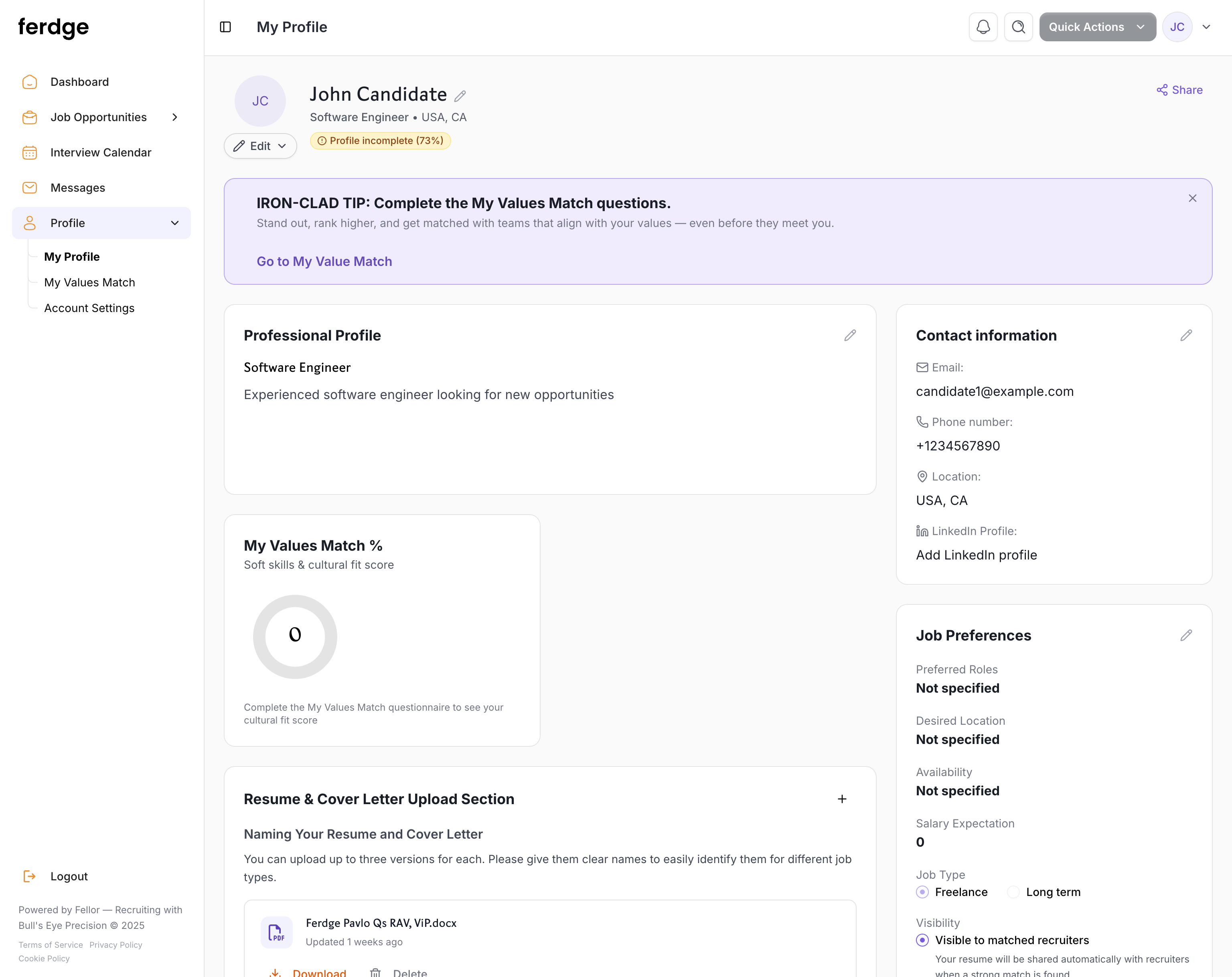
Roles, permissions, and a security model that scales/
Company + personal info, core values, notifications, security & privacy, and a backend RBAC test view — all settled into a settings surface that respects org boundaries.
- Per-role permission sets
- Org-bounded data access
- Notification preferences per surface
From job post to offer/
A walk through the recruiter and hiring-manager surfaces.
Hiring software that respects how teams actually hire/
If you're building an HR product and want it to feel coherent across recruiter, hiring-manager, and admin views — happy to help.